
· By Jim Zielinski
Separation Anxiety in Dogs: Signs, Causes, and a Step-by-Step Plan to Help
How to tell if your dog has separation anxiety, what causes it, and a gentle, practical plan (plus the gear that helps) to teach your dog that being home alone is safe.
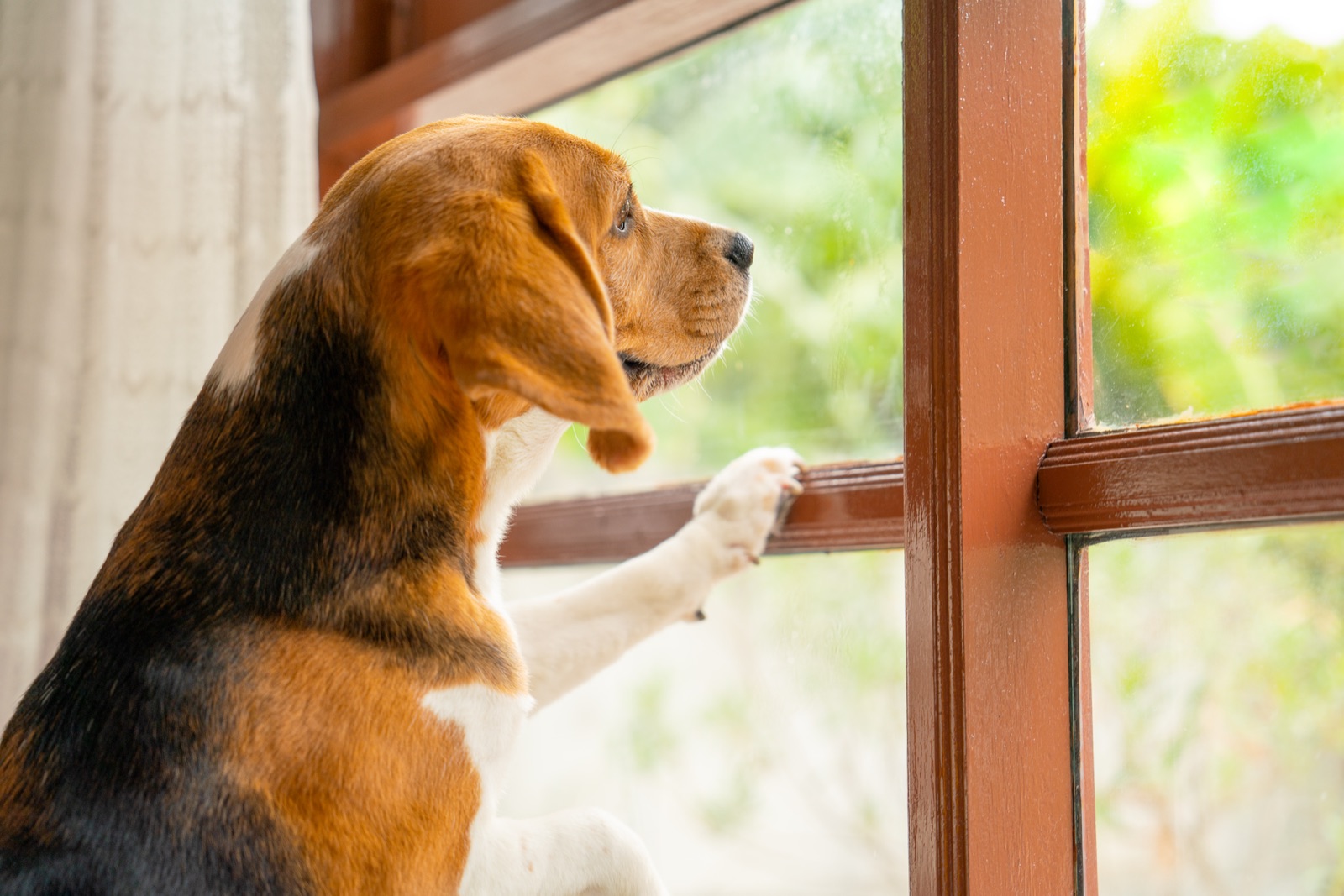
Separation anxiety is real distress, not bad behavior. A dog with separation anxiety isn’t chewing the door frame out of spite or barking to get back at you for leaving. They’re panicking because the person they depend on has disappeared, and they don’t know when (or if) you’re coming back. The good news is that it can be improved, often dramatically, with patience and a plan. Here’s how to recognize it, what tends to cause it, and the step-by-step approach trainers and veterinary behaviorists use to help.
This post contains affiliate links. If you buy through them, we may earn a small commission at no extra cost to you. As an Amazon Associate we earn from qualifying purchases. We only suggest products we think genuinely help.
What separation anxiety looks like
The key clue is timing. True separation anxiety shows up when your dog is alone, or separated from a specific person, and usually starts within the first 20 to 30 minutes after you leave. Common signs include:
- Destruction aimed at exits. Scratching or chewing doors, door frames, window sills, and crate bars, which is your dog trying to get to you.
- Howling, barking, or whining that goes on long after you’ve gone (neighbors are often the first to tell you).
- House soiling by a dog who is otherwise reliably house-trained.
- Pacing, panting, drooling, or trembling, sometimes with wet fur around the mouth or paws.
- Escape attempts, which can lead to broken teeth, torn nails, and real injuries.
- Shadowing you at home and growing anxious as you get ready to leave (picking up keys, putting on shoes).
- Refusing food or treats while alone, even favorites they’d gobble up if you were home.
If the chewing, barking, or accidents also happen while you’re home, you may be looking at boredom, under-exercise, incomplete house training, or a medical issue instead. That’s worth ruling out first, because the fix is different.
Is it anxiety or boredom?
A simple test: set up a camera and watch. A bored dog tends to wander, play, nap, and get into trouble in a relaxed, curious way. An anxious dog tends to fixate on the door or window, vocalize, pace, and struggle to settle at all. A pet camera like the Furbo 360° Dog Camera lets you see exactly what happens after you leave, and the footage is invaluable if you end up working with a trainer or vet. (Skip the treat-tossing and talk-back features for anxious dogs at first; hearing your voice without you appearing can make things worse for some.)
What causes it
There’s rarely a single cause, but separation anxiety often follows a change. Common triggers include:
- A change in routine, such as returning to the office after months of working from home.
- A move to a new home.
- A change in the household, like a family member leaving for college, a divorce, or the loss of another pet.
- Rehoming or a shelter stay. Rescue dogs are overrepresented, likely because they’ve already experienced losing their people once.
- Never learning to be alone. Puppies who were never gradually taught that alone time is normal can struggle as adults.
Some dogs are simply more attached by nature. Breeds known as “velcro dogs” (we live with two Vizslas, so we know the type well) can be more prone to it, but any dog of any breed or age can develop separation anxiety.
A step-by-step plan to help
The goal is to teach your dog, in tiny steps, that you always come back and that being alone is safe and even a little boring. This takes weeks to months, not days, but progress usually builds on itself.
1. Talk to your vet first
Rule out pain, urinary issues, and other medical causes of house soiling or restlessness. For moderate to severe cases, ask about anti-anxiety medication. There are FDA-approved medications for canine separation anxiety (clomipramine and fluoxetine are the best known), and for many dogs, medication lowers the panic enough for training to actually work. Your vet can also refer you to a veterinary behaviorist or a certified separation anxiety trainer.
2. Stop the panic while you train
This is the hardest part, and the most important. Every time your dog is left alone long enough to panic, it reinforces the fear and sets training back. While you work on it, try to arrange for your dog not to be alone beyond what they can handle: a dog sitter, a trusted neighbor, doggy daycare, bringing your dog along, or a friend or family member who works from home.
3. Practice absences that are too short to worry about
This is the heart of the plan, a process trainers call desensitization. Start with an absence so short your dog stays calm, even if that’s stepping outside the door for three seconds, then come back in before they react. Repeat, and very gradually increase the time: 5 seconds, 10, 20, 45, a minute, and so on. If your dog shows stress, go back to the last time they handled well.
Watch on your camera during these sessions so you know exactly where your dog’s threshold is. Most people move too fast. Slow is fast here.
4. Take the drama out of departure cues
Many anxious dogs start panicking the moment you grab your keys or put on your shoes. Pick up your keys and then sit on the couch. Put on your coat and make dinner. When these cues stop predicting that you’re leaving, they stop triggering anxiety.
Keep hellos and goodbyes calm and low-key, too. A big emotional farewell or an excited reunion can make the contrast between “together” and “alone” feel even bigger.
5. Exercise the body and the brain before you go
A dog who has had a good walk, a sniff-heavy adventure, and some mental work is much more likely to settle. Aim for a solid walk before longer absences, then offer something to work on as you leave:
- A KONG Classic stuffed with food and frozen overnight can keep a dog busy for 20 to 30 minutes or more.
- A LickiMat spread with plain yogurt, pumpkin, or wet food. Licking is naturally calming for dogs.
- A snuffle mat or a puzzle toy like the Outward Hound Nina Ottosson Dog Tornado, which turns mealtime into a sniffing game.
One honest caveat: food toys help mild cases and are great for prevention, but a truly panicked dog often won’t touch food while alone. If the stuffed KONG is untouched when you get home, that’s useful information, not a failure. It tells you your dog needs a slower plan.
6. Create a calm, safe space
Some dogs feel safer in a smaller area, like a bedroom or kitchen closed off with a walk-through pet gate, with a comfy bed, water, and something that smells like you (a worn T-shirt works well). Be careful with crates: a dog who already loves their crate may find it comforting, but confining a panicked dog can lead to injuries from trying to escape. Let your camera footage guide you.
Masking outside noise can help too. A white noise machine or calming music made for dogs softens the sounds of footsteps, cars, and delivery trucks that can set off an already anxious dog.
7. Consider calming aids (as a supplement, not a fix)
These won’t cure separation anxiety on their own, but some owners find they take the edge off while training does the real work:
- An Adaptil Calm diffuser, which releases a synthetic version of the calming pheromone mother dogs produce.
- A ThunderShirt, a snug wrap that applies gentle, constant pressure.
- A calming supplement such as VetriScience Composure. Check with your vet before adding any supplement, especially if your dog takes medication.
What works for our dogs, Eva and Leia
Our two Vizslas, Eva and Leia, have become more sensitive to South Florida’s intense thunderstorms as they’ve gotten older. Storm anxiety isn’t the same thing as separation anxiety, but the calming tools overlap, and we’ve found a combination that works for us: calming chews made for senior dogs, NaturVet Quiet Moments Senior Wellness, plus their ThunderShirts when a storm rolls in. Neither one is a cure on its own, and every dog is different, but together they make a considerable difference for them on stormy days.
8. Never punish
Punishing a dog for what happened while you were gone doesn’t work. They can’t connect the scolding with the chewed door from hours ago, and it adds fear to an already fearful situation. Clean up calmly and adjust the plan.
How long does it take?
Mild cases can improve noticeably in a few weeks. Moderate to severe cases often take several months of consistent practice, and some dogs do best with a combination of training and medication. Progress isn’t always a straight line, either. A stressful week, a schedule change, or a thunderstorm can cause a temporary setback. Step back to an easier level and keep going.
Frequently asked questions
Will getting a second dog help with separation anxiety?
Sometimes, but often not. Many dogs with separation anxiety are attached to a specific person rather than simply wanting company, so another dog doesn’t ease the panic. Before adding a new family member, try a trial run with a friend’s calm dog or a pet sitter and watch the results on camera.
Should I crate a dog with separation anxiety?
Only if your dog already loves their crate and stays relaxed in it when you watch on camera. Confining a panicking dog can lead to injuries from escape attempts, so a gated room is often the safer choice.
Can puppies get separation anxiety?
Yes. The best prevention is teaching short, positive stretches of alone time from the very beginning, even when someone is home, so being alone becomes a normal part of life.
Does leaving the TV or radio on help?
It can help some dogs by masking outside noise, and it won’t hurt. Think of it as a helpful extra, not a treatment on its own.
When should I call a professional?
Call your vet right away if your dog is injuring themselves. If you’ve seen little progress after a few weeks of consistent practice, ask your vet about a referral to a veterinary behaviorist or a certified separation anxiety trainer.
Recommended reading
If you want to go deeper, two short, practical books are favorites among trainers and owners:
- I’ll Be Home Soon by Patricia McConnell, a classic, compassionate guide to preventing and treating separation anxiety.
- Be Right Back! by Julie Naismith, a step-by-step program for teaching dogs to be home alone.
The gear from this guide, at a glance
- See what happens when you leave: Furbo 360° Dog Camera
- Keep them busy: KONG Classic, LickiMat, snuffle mat, and Dog Tornado puzzle
- Create a safe space: walk-through pet gate and white noise machine
- Take the edge off: Adaptil Calm diffuser, ThunderShirt, VetriScience Composure, and NaturVet Quiet Moments calming chews
You’re not in this alone
If your dog struggles when you leave, it’s because you matter so much to them. That bond is the very thing that makes the hard days worth it. Be patient with your dog and with yourself, celebrate the small wins (that first calm five minutes is a big deal), and lean on your vet or a qualified trainer when you need to.
And someday, when your dog is snoozing peacefully while you’re out, those pet camera clips of their progress are worth keeping. They’re part of your story together, and we’d love to help you tell it.
Sources
- ASPCA: Separation Anxiety
- American Kennel Club: Separation Anxiety in Dogs: Signs, Causes, and Prevention
- VCA Animal Hospitals: Separation Anxiety in Dogs
- American Veterinary Society of Animal Behavior: Position Statement on Humane Dog Training
This article is for general information and isn’t a substitute for advice from your veterinarian. If your dog is injuring themselves or is in severe distress, contact your vet right away.
